
High-Rise Window Cleaning: 6 Essential Safety Protocols for South Florida Businesses
High-Rise Window Cleaning is a specialized service that demands unwavering attention to safety, especially in the dynamic South Florida environment. For businesses operating in towering structures, maintaining pristine windows is not just about aesthetics; it’s a critical aspect of building maintenance and occupant well-being. However, the inherent risks associated with working at extreme heights necessitate stringent adherence to established safety protocols.
This comprehensive guide will delve into the six essential safety protocols that every South Florida business must understand and demand from their professional High-Rise Window Cleaning provider. From advanced equipment to rigorous training, we will explore the measures that ensure both immaculate results and the paramount safety of all personnel involved. Understanding these protocols is key to protecting your investment and your team.
Key Takeaways for High-Rise Window Cleaning Safety
- Understand the critical role of comprehensive safety protocols in mitigating the inherent dangers of High-Rise Window Cleaning.
- Learn about the specialized equipment and techniques, such as suspended scaffolding and rope access, essential for safe and effective operations.
- Discover why proper certification, ongoing training, and robust insurance are non-negotiable for any reputable High-Rise Window Cleaning company.
- Identify the factors influencing the cost and frequency of professional High-Rise Window Cleaning services in South Florida.
The Critical Importance of Safety in High-Rise Window Cleaning
The dazzling skyline of South Florida is a testament to architectural ambition, but with every gleaming skyscraper comes the ongoing challenge of maintenance. Among these, High-Rise Window Cleaning stands out as one of the most visually impactful yet inherently dangerous tasks. The potential dangers of High-Rise Window Cleaning are significant, including falls from heights, equipment malfunctions, electrocution risks, and exposure to extreme weather conditions. This is why strict safety protocols are not merely guidelines but absolute necessities.
For building owners and facility managers, understanding these risks and the measures taken to mitigate them is paramount. A lapse in safety can lead to catastrophic accidents, severe legal repercussions, and irreparable damage to a company’s reputation. Ensuring the safety of workers during High-Rise Window Cleaning operations should always be the top priority, making the selection of a professional, safety-conscious provider crucial.
Why is specialized High-Rise Window Cleaning crucial for tall buildings? Standard cleaning methods are simply insufficient and unsafe for structures reaching significant heights. Professionals possess the training, equipment, and expertise to safely navigate these challenges, manage unique architectural features, and deliver a superior, streak-free clean that enhances your building’s curb appeal while protecting everyone involved.

Protocol 1: Advanced Equipment and Rigorous Inspections for High-Rise Window Cleaning
At the core of safe High-Rise Window Cleaning operations is the use of specialized, well-maintained equipment. What equipment is necessary for High-Rise Window Cleaning? This includes suspended scaffolding (often called swing stages), rope access (rappelling) systems, water-fed poles, industrial-grade squeegees, and powerful detergents. Each piece of equipment plays a vital role in ensuring both efficiency and worker safety at extreme heights.
The Role of Specialized Gear in High-Rise Window Cleaning
Suspended scaffolding provides a stable platform for workers, allowing them to access large sections of a building’s facade. Rope access techniques, on the other hand, offer unparalleled flexibility for complex architectural designs and hard-to-reach areas. Both methods require specific training and adherence to strict operational guidelines. The choice of technique often depends on the building’s design and the specific cleaning requirements, ensuring the most effective techniques for High-Rise Window Cleaning are employed.
Daily Pre-Use Inspections for High-Rise Window Cleaning Equipment
Before any High-Rise Window Cleaning operation begins, every piece of equipment must undergo a thorough inspection. This includes checking ropes, harnesses, anchors, motors, and platforms for any signs of wear, damage, or malfunction. Daily checks are critical to identify potential failures before they occur, preventing accidents and ensuring the integrity of the entire system. This proactive approach is a cornerstone of responsible High-Rise Window Cleaning.
Protocol 2: Comprehensive Training and Certifications for High-Rise Window Cleaning
Even the best equipment is only as safe as the people operating it. Professional High-Rise Window Cleaning teams undergo rigorous training that covers a wide array of safety procedures and technical skills. What certifications or training do High-Rise Window Cleaners need? This typically includes fall protection, rope access techniques, emergency rescue procedures, and comprehensive OSHA compliance.
Essential Certifications for High-Rise Window Cleaning Professionals
Certifications from organizations like SPRAT (Society of Professional Rope Access Technicians) or IRATA (Industrial Rope Access Trade Association) are industry benchmarks for rope access technicians. These certifications ensure that cleaners have demonstrated proficiency in safe working practices at height. Ongoing safety education is essential to uphold industry standards and best practices, keeping teams updated on the latest advancements in High-Rise Window Cleaning safety.
Continuous Education and Skill Development in High-Rise Window Cleaning
The field of High-Rise Window Cleaning is constantly evolving, with new technologies and safety standards emerging regularly. Reputable companies invest in continuous education and skill development for their teams. This ensures that every cleaner is not only proficient in current techniques but also adaptable to new challenges and equipped with the knowledge to handle any situation safely and efficiently. This commitment to learning directly translates to safer operations for your South Florida business.
Protocol 3: Robust Fall Protection Systems in High-Rise Window Cleaning
Fall protection is arguably the most critical aspect of High-Rise Window Cleaning safety. Given the extreme heights involved, a multi-layered approach to preventing falls is absolutely essential. This protocol involves a combination of personal protective equipment (PPE), secure anchor points, and redundant safety systems.
Personal Protective Equipment (PPE) for High-Rise Window Cleaning
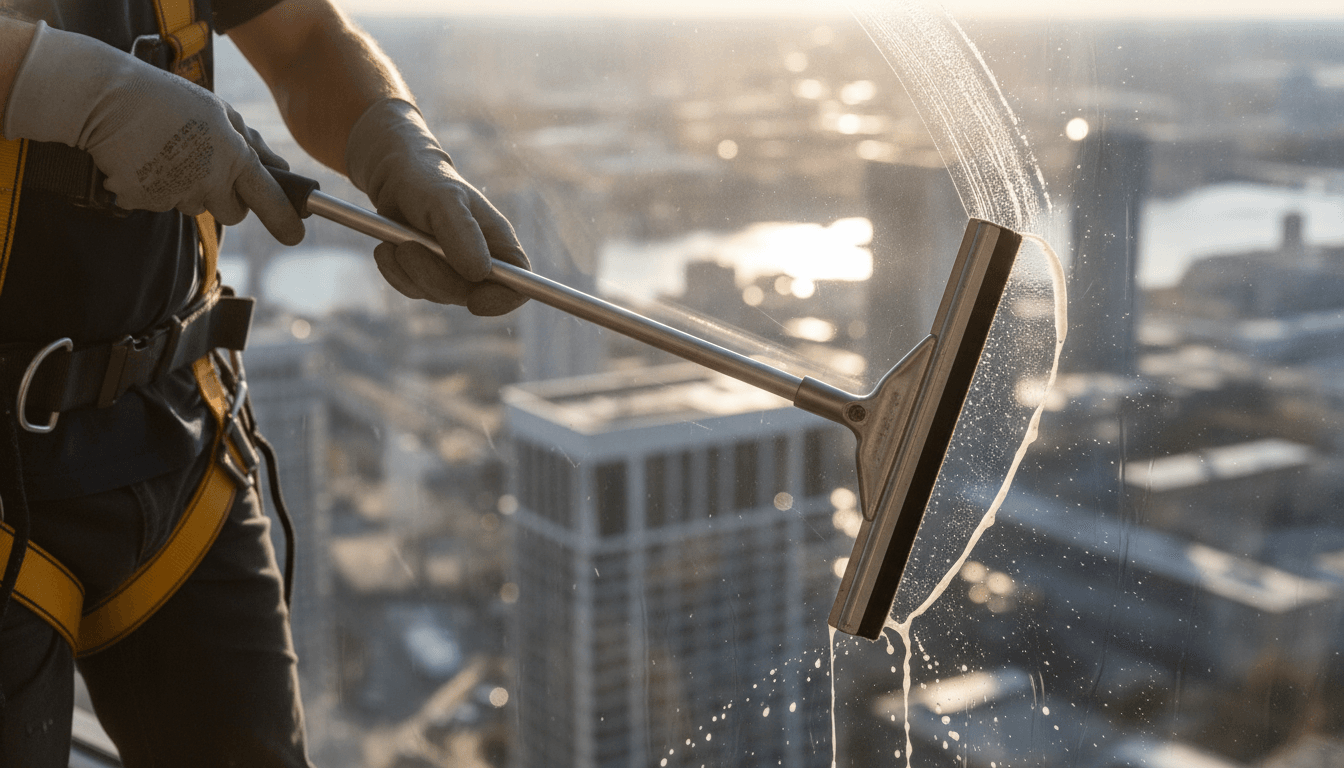
Every worker engaged in High-Rise Window Cleaning must wear appropriate PPE, including full-body harnesses, safety helmets, and non-slip footwear. These items are designed to protect workers in the event of a fall and to prevent head injuries from falling debris. The proper fit and condition of PPE are checked daily to ensure maximum effectiveness. For more details on fall protection standards, refer to OSHA Fall Protection Standards.
Secure Anchor Points and Redundant Safety Lines for High-Rise Window Cleaning
All fall protection systems rely on secure anchor points on the building’s rooftop or facade. These anchors must be certified and regularly inspected to ensure they can withstand significant loads. Furthermore, workers typically use at least two independent safety lines: a primary work line and a secondary backup line. This redundancy ensures that if one system fails, the other will prevent a fall, providing an essential layer of protection during High-Rise Window Cleaning.
Ensure Pristine Views: Trust JJL Cleaning for Your High-Rise Window Cleaning Needs
JJL Cleaning Services provides unparalleled high-rise window cleaning, backed by over a decade of experience, full licensing, and comprehensive insurance for peace of mind.
Protocol 4: Thorough Hazard Assessment and Site-Specific Planning for High-Rise Window Cleaning
No two high-rise buildings are exactly alike, and neither are their cleaning challenges. Before any High-Rise Window Cleaning project commences, a detailed hazard assessment and site-specific safety plan are mandatory. This proactive step identifies potential risks unique to the building and outlines specific strategies to mitigate them.
Identifying Site-Specific Risks for High-Rise Window Cleaning
This assessment includes evaluating the building’s architecture, identifying potential obstacles like balconies or intricate facade elements, assessing the condition of anchor points, and considering environmental factors. For South Florida, this means accounting for strong winds, sudden rain, and intense sun exposure. Do High-Rise Window Cleaners work during adverse weather conditions? Generally, no. Operations are typically halted during high winds, heavy rain, or lightning to ensure worker safety.
Developing a Tailored Safety Plan for High-Rise Window Cleaning
Based on the hazard assessment, a comprehensive safety plan is developed. This plan details the specific equipment to be used, the access methods, emergency procedures, communication protocols, and the roles and responsibilities of each team member. This meticulous planning ensures that every aspect of the High-Rise Window Cleaning operation is carefully considered and executed with safety in mind.
Protocol 5: Clear Communication and Emergency Preparedness in High-Rise Window Cleaning
Effective communication is the lifeline of any high-risk operation, especially in High-Rise Window Cleaning. Teams must maintain constant contact, both among themselves and with ground support, to ensure smooth operations and rapid response in emergencies. What safety protocols are followed during High-Rise Window Cleaning? Clear communication is a top priority.
Establishing Communication Channels for High-Rise Window Cleaning Teams
This typically involves two-way radios or other dedicated communication devices. Workers at height need to be able to relay information about their position, progress, and any potential issues to their colleagues and supervisors. Ground support personnel monitor the team, manage equipment, and serve as a crucial link to emergency services if needed. This seamless flow of information is vital for safe High-Rise Window Cleaning.
Emergency Response Training for High-Rise Window Cleaning Incidents
Despite all precautions, accidents can happen. Therefore, every High-Rise Window Cleaning team must be thoroughly trained in emergency response and rescue procedures. This includes knowing how to safely retrieve an injured worker, administer first aid, and coordinate with local emergency services. Regular drills and refresher courses ensure that teams are prepared to act swiftly and effectively in any unforeseen situation, minimizing risks during High-Rise Window Cleaning.
Protocol 6: Comprehensive Insurance and Compliance for High-Rise Window Cleaning
Beyond the operational aspects of safety, legal and financial protections are equally important. Are High-Rise Window Cleaning companies required to be insured? Absolutely. Reputable companies carry comprehensive liability insurance and workers’ compensation to protect both their employees and their clients. This is a non-negotiable requirement for any professional High-Rise Window Cleaning service.
Understanding Insurance Coverage for High-Rise Window Cleaning
Liability insurance protects your business from potential damages to property or third-party injuries that might occur during the cleaning process. Workers’ compensation covers medical expenses and lost wages for any worker injured on the job. Verifying these coverages is a critical due diligence step for any South Florida business hiring a High-Rise Window Cleaning provider. It safeguards against unforeseen financial burdens.
Adherence to OSHA and Local Regulations for High-Rise Window Cleaning
Professional High-Rise Window Cleaning companies must strictly adhere to all Occupational Safety and Health Administration (OSHA) regulations, as well as any specific local and state safety codes. This includes standards for fall protection, scaffolding, and personal protective equipment. Compliance demonstrates a commitment to safety and ensures that operations meet the highest legal and ethical standards. This is a hallmark of a trustworthy High-Rise Window Cleaning partner.
Choosing the Right Partner for Your High-Rise Window Cleaning Needs
Selecting a professional High-Rise Window Cleaning company in South Florida requires careful consideration of their safety record, training, equipment, and insurance. How often should windows on a high-rise building be cleaned? The frequency depends on factors like location, weather, and building usage, but typically every 3-6 months in South Florida helps maintain aesthetics and prevent mineral buildup. What factors influence the pricing of High-Rise Window Cleaning? These include building height, complexity, frequency, and the chosen cleaning method.
Who offers professional High-Rise Window Cleaning services near me? Look for companies with a proven track record, transparent safety protocols, and comprehensive insurance. Where can I hire a reputable High-Rise Window Cleaning company? Start by checking local reviews, asking for references, and verifying certifications. How long does a typical High-Rise Window Cleaning project take? This varies greatly depending on the building size and number of cleaners, but a detailed quote will provide an estimate.
To request a quote for High-Rise Window Cleaning services, contact a reputable provider directly. They will assess your building’s specific needs and provide a customized estimate. By prioritizing safety and choosing an experienced partner, you ensure your building’s windows remain sparkling clean, enhancing its appeal and providing clear views for years to come.
The commitment to safety in High-Rise Window Cleaning is not just a regulatory obligation; it is a moral imperative. By understanding and demanding adherence to these six essential safety protocols, South Florida businesses can ensure that their gleaming facades are maintained without compromising the well-being of the dedicated professionals who make it possible. Trusting an expert team like JJL Cleaning Services ensures peace of mind and unparalleled results.
Frequently Asked Questions About High-Rise Window Cleaning
What equipment is necessary for high-rise window cleaning?
Effective High-Rise Window Cleaning requires specialized equipment such as suspended scaffolding (swing stages), Rope Access (rappelling) systems, water-fed poles, squeegees, industrial-grade detergents, safety harnesses, helmets, and communication devices. These tools ensure both efficiency and worker safety at extreme heights.
Are high-rise window cleaning companies required to be insured?
Absolutely. Reputable High-Rise Window Cleaning companies, like JJL Cleaning Services, are legally required and ethically bound to carry comprehensive liability insurance and workers’ compensation. This protects clients from potential damages and ensures worker welfare in case of an accident.
What safety protocols are followed during high-rise window cleaning?
Strict safety protocols are paramount for High-Rise Window Cleaning. These include thorough equipment inspections, fall protection systems, mandatory use of personal protective equipment (PPE), hazard assessments, clear communication, and adherence to OSHA regulations. Teams are trained to respond to emergencies swiftly.
How often should windows on a high-rise building be cleaned?
The frequency of High-Rise Window Cleaning depends on location, weather conditions, and building usage. Typically, commercial high-rises in South Florida benefit from cleaning every 3-6 months to maintain aesthetics, prevent mineral buildup, and ensure longevity of window materials.
Why is specialized high-rise window cleaning crucial for tall buildings?
Specialized High-Rise Window Cleaning is crucial due to the inherent risks and complexities involved. Standard methods are insufficient and unsafe for tall structures. Professionals possess the training, equipment, and expertise to safely navigate heights, manage unique architectural challenges, and deliver a superior, streak-free clean.
What certifications or training do high-rise window cleaners need?
Professional High-Rise Window Cleaning teams undergo rigorous training in fall protection, rope access techniques (e.g., SPRAT or IRATA certifications), OSHA compliance, and safe equipment operation. Ongoing safety education is essential to uphold industry standards and best practices.
How can I request a quote for high-rise window cleaning services?
Requesting a quote for professional High-Rise Window Cleaning is straightforward. Contact JJL Cleaning Services directly via phone at 561-507-6323 or visit our website at https://jjlcleanservices.com/. We’ll assess your building’s specific needs and provide a customized, transparent estimate.
What are the potential dangers of high-rise window cleaning?
The potential dangers of High-Rise Window Cleaning are significant and include falls from heights, equipment malfunctions, electrocution risks, exposure to extreme weather, and falling debris. This is why strict safety protocols, extensive training, and professional expertise are non-negotiable for all operations.

