
Commercial Painting Preparation is the bedrock of any successful commercial painting project in Boca Raton. A flawless, long-lasting finish isn’t achieved by paint alone; it’s the meticulous work done beforehand that truly makes the difference. Without proper preparation, even the highest quality paint can peel, crack, or fade prematurely, undermining your investment and the professional appearance of your business property. This comprehensive guide will walk you through 7 proven steps to ensure your commercial painting project achieves a durable and aesthetically pleasing result.
From initial cleaning to final priming, each stage of Commercial Painting Preparation plays a critical role in paint adhesion and longevity. We’ll explore the essential techniques, necessary equipment, and critical safety measures that professional contractors employ. Understanding these steps will empower you to make informed decisions and ensure your Boca Raton property stands out with a finish that truly endures.
Key Takeaways for Commercial Painting Preparation
- Understand the 7 essential steps of Commercial Painting Preparation for a durable and professional finish.
- Learn why thorough surface cleaning and repair are non-negotiable for optimal paint adhesion and longevity.
- Discover the specific techniques and equipment required for preparing various commercial surfaces, from metal to concrete.
- Identify the crucial safety protocols and waste management practices integral to any commercial painting project.
Step 1: Thorough Inspection and Assessment for Commercial Painting Preparation
The initial phase of any successful commercial painting project is a detailed inspection. This step is crucial for understanding the existing conditions of the surfaces to be painted and identifying any potential challenges. A comprehensive assessment allows for the creation of an accurate project plan, ensuring all necessary resources and techniques are allocated for effective Commercial Painting Preparation.
During this stage, professionals evaluate the type of substrate (e.g., concrete, metal, stucco, drywall), existing paint condition, presence of mildew, rust, or peeling paint, and any structural damage. This early insight helps determine the most appropriate cleaning methods, repair strategies, and priming requirements. It also helps in estimating how long commercial painting preparation typically takes for a large building, allowing for realistic project timelines.
Why Proper Surface Preparation is Crucial
Proper surface preparation is not merely a recommendation; it is the foundation upon which the entire paint system relies. Without it, paint adhesion is compromised, leading to premature failure, such as blistering, cracking, or peeling. This not only diminishes the aesthetic appeal of your commercial property but also results in costly reworks and increased maintenance expenses down the line. Investing time and effort in this initial stage ensures a durable and professional finish.
When Should Commercial Painting Preparation Begin?
Ideally, commercial painting preparation should begin well in advance of the actual painting schedule. This allows ample time for thorough cleaning, repairs, and drying, especially in Boca Raton’s humid climate. Rushing this phase can lead to significant issues later. Typically, preparation can start days or even weeks before the first coat of paint is applied, depending on the scale and condition of the property.
Step 2: Comprehensive Cleaning and Degreasing in Commercial Painting Preparation
Once the assessment is complete, the next critical step in Commercial Painting Preparation is thorough cleaning. Surfaces accumulate dirt, grime, grease, mildew, and other contaminants over time, all of which can prevent paint from adhering properly. Effective cleaning ensures a clean, stable base for the new coating.
For exterior surfaces, pressure washing is often the most efficient method, removing loose paint, dirt, and mildew. For interior spaces or delicate surfaces, manual scrubbing with appropriate cleaning solutions may be necessary. The goal is to remove all foreign substances that could interfere with paint adhesion. This step is vital for achieving a flawless finish.
Chemicals and Solutions for Cleaning Commercial Surfaces
Various chemicals and solutions are used for cleaning commercial surfaces before painting, depending on the type of contaminant and substrate. For mildew, a bleach and water solution or specialized mildew removers are effective. Degreasers are essential for removing oil and grease from metal or kitchen areas. For general dirt, commercial-grade detergents are typically used. Always ensure proper ventilation and safety gear when working with these solutions.
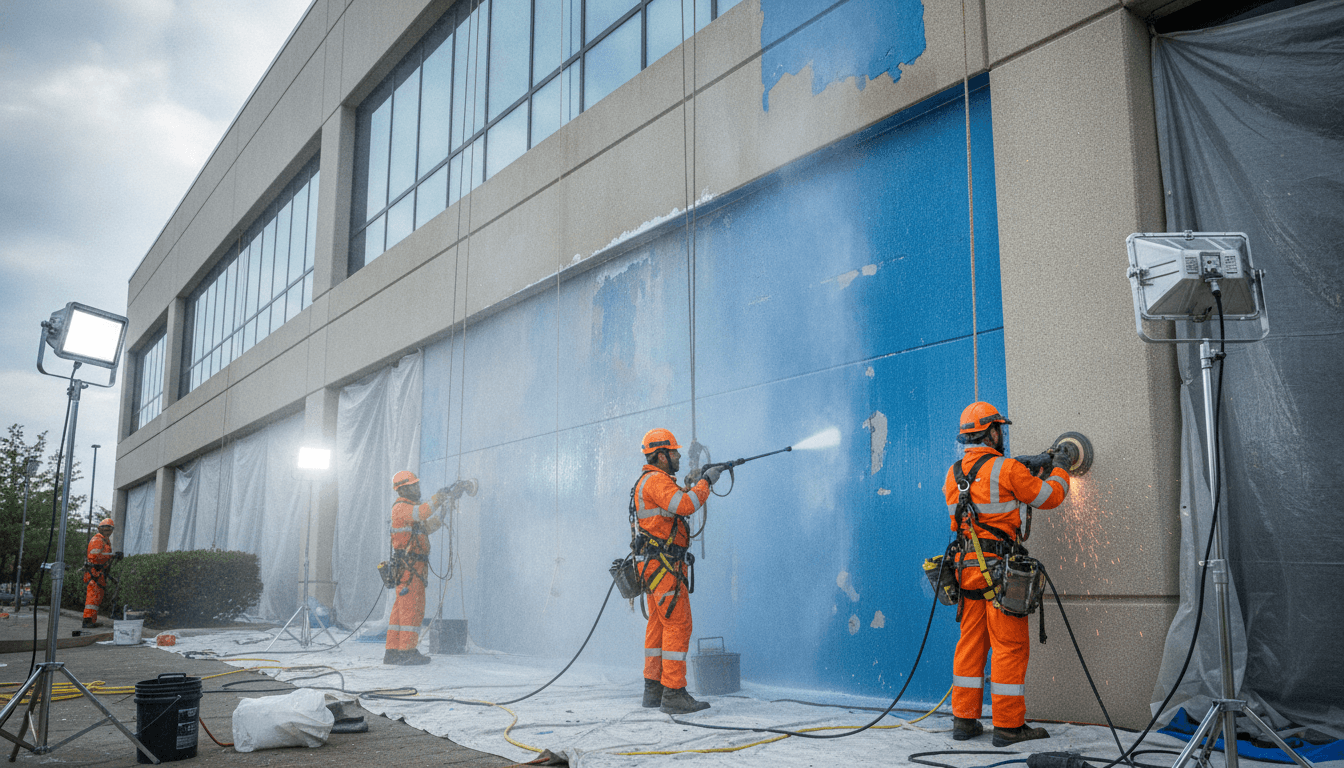
Equipment Needed for Commercial Painting Surface Preparation
The right equipment is essential for efficient and effective cleaning. This includes commercial-grade pressure washers, scrub brushes, sponges, buckets, and personal protective equipment (PPE) such as gloves, eye protection, and respirators. For higher areas, scaffolding, lifts, or extension poles may be required. Specialized equipment like sandblasters might be needed for heavy rust or old paint removal on certain surfaces, ensuring proper Commercial Painting Preparation.
Step 3: Surface Repairs and Restoration in Commercial Painting Preparation
After cleaning, the next crucial phase of Commercial Painting Preparation involves addressing any surface imperfections. Cracks, holes, dents, and damaged areas must be repaired to create a smooth, uniform substrate for painting. Neglecting repairs can lead to an uneven finish, where imperfections show through the new paint, detracting from the overall aesthetic and durability.
This step includes patching holes in drywall, repairing stucco cracks, filling dents in metal, and addressing any water damage or structural issues. The type of repair material used will depend on the surface and the extent of the damage. Ensuring these repairs are done correctly is paramount for a high-quality outcome.
Preparing Different Commercial Surfaces for Painting
Preparation varies significantly by surface type. For metal, rust removal (sanding, wire brushing, or chemical treatments) and degreasing are critical, followed by a rust-inhibiting primer. Concrete surfaces require cleaning, etching (if necessary for adhesion), and crack repair, often with epoxy fillers, before applying a concrete-specific primer.
Drywall preparation involves patching holes and cracks with spackle or joint compound, sanding smooth, and then spot priming the repaired areas to ensure uniform absorption of the topcoat. Each material demands a tailored approach to achieve optimal Commercial Painting Preparation and a lasting finish. This attention to detail is what separates a good paint job from a great one.
Step 4: Sanding and Profiling for Optimal Commercial Painting Preparation
Sanding and profiling are indispensable steps in Commercial Painting Preparation, especially after repairs and cleaning. Sanding creates a smooth surface, removes any remaining loose paint or debris, and helps to feather out patched areas, making them blend seamlessly with the surrounding surface. It also provides a mechanical profile, or
Ready for Flawless Commercial Painting Preparation in Boca Raton?
JJL Cleaning Services provides expert, licensed, and insured commercial painting preparation, ensuring your project starts right for a durable, professional finish.
Frequently Asked Questions About Commercial Painting Preparation
What are the essential steps for commercial painting preparation?
Essential steps for commercial painting preparation include thorough cleaning, surface inspection, repairing imperfections, sanding or roughening the surface, priming, masking adjacent areas, and final dust removal. Each step ensures optimal adhesion and a long-lasting finish.
Why is proper surface preparation crucial for commercial painting projects?
Proper surface preparation is crucial because it directly impacts the adhesion, durability, and overall appearance of the paint. Without it, paint can peel, blister, or fade prematurely, leading to costly reworks and a less professional look for your commercial property.
How do you prepare different commercial surfaces (e.g., metal, concrete, drywall) for painting?
Preparation varies by surface. Metal surfaces require degreasing, rust removal, and often a rust-inhibiting primer. Concrete needs cleaning, etching, and crack repair, followed by a concrete-specific primer. Drywall involves patching holes, sanding smooth, and spot priming repairs before a full prime coat.
Who typically performs commercial painting preparation services?
Commercial painting preparation services are typically performed by experienced professional painting contractors or specialized cleaning and maintenance companies like JJL Cleaning Services. These teams possess the expertise, equipment, and safety knowledge required for commercial projects.
How much does commercial painting preparation cost?
The cost of commercial painting preparation varies widely based on the size of the area, the type and condition of the surfaces, the extent of repairs needed, and the specific preparation methods. It’s best to get a detailed quote from a reputable provider like JJL Cleaning Services for an accurate estimate.
What safety precautions are necessary during commercial painting preparation?
Safety precautions include wearing appropriate personal protective equipment (PPE) such as gloves, respirators, and eye protection, ensuring adequate ventilation, securing the work area, and safely handling and disposing of chemicals and debris. Adhering to OSHA guidelines is paramount.
What are the common mistakes to avoid during commercial painting preparation?
Common mistakes include skipping cleaning, inadequate drying time, overlooking minor surface imperfections, using the wrong primers, failing to mask properly, and not addressing moisture issues. These errors can compromise the final paint finish and its longevity.
How do I hire the best commercial painting preparation company?
To hire the best company, look for licensed, insured, and bonded professionals with strong local references and a proven track record in commercial projects. Check their experience, safety protocols, and request detailed quotes, like those offered by JJL Cleaning Services in Boca Raton.
What is included in a typical commercial painting preparation service quote?
A typical commercial painting preparation quote includes details on cleaning methods (e.g., pressure washing, chemical cleaning), surface repairs (patching, sanding), priming, masking, labor costs, equipment rental, and waste disposal. Ensure all aspects of preparation are clearly outlined.
Learn more from authoritative resources: Consumer Reports and HGTV.

